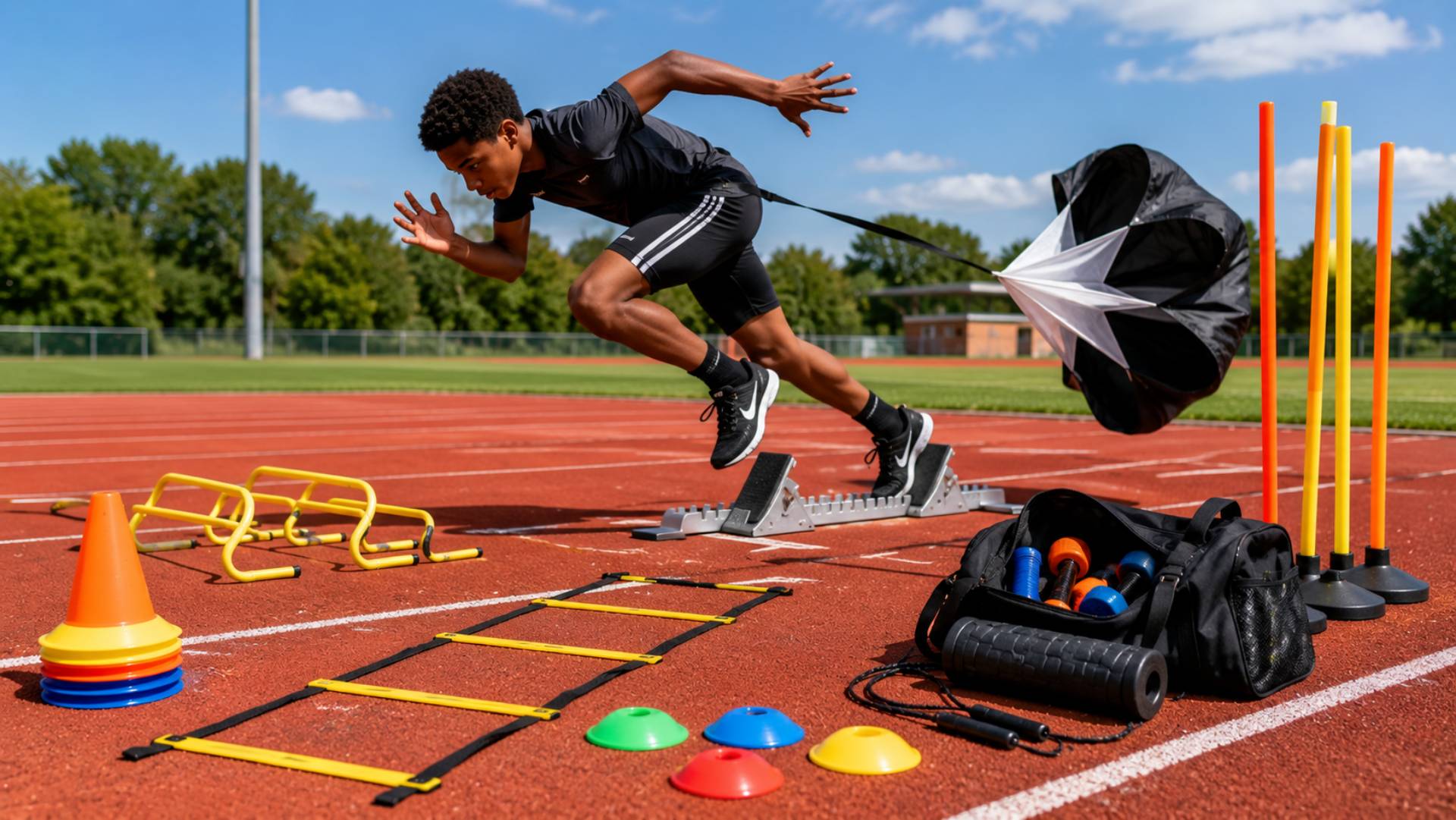
Young sprinters often want to run at full speed every time. Coaches, however, need to build the start, acceleration and stride pattern in manageable pieces. Training tools can help when each one has a clear purpose. They should provide information or shape a drill, not distract athletes with constant setup.
For starts, the simplest tool is a visible line. It gives beginners a consistent place for hands and feet while they learn body position. Starting blocks may be introduced when athletes have the strength, coordination and coaching support to use them well. The goal is not to copy an elite stance immediately, but to create a stable position that allows a controlled first movement.
Cones are useful for organising acceleration. A short corridor can encourage athletes to drive forward without drifting across the lane. Markers placed at planned distances also help coaches observe when posture begins to rise. This use of athletics equipment turns a broad instruction such as “stay low” into a point that can be seen and discussed.
Low hurdles or flexible wickets can support stride rhythm. Spacing should match the athlete’s current ability and the aim of the drill. Gaps that are too long may cause reaching, braking or loss of posture. A coach can begin conservatively, watch the movement and adjust rather than forcing every runner through one fixed pattern.
Timing tools need careful use with children. A stopwatch can show progress, but it can also make every repetition feel like a test. Some sessions should measure technical consistency instead of speed. Coaches might record reaction quality, first-step direction or whether the athlete maintained relaxed arm action through a marked zone.
Video can provide useful feedback when handled simply. A short side-on clip may reveal an upright first step, overstriding or arms crossing the body. The coach should choose one point to discuss rather than presenting a long list of faults. Any recording must also follow the school or club’s privacy and consent procedures.
Resistance tools require judgement. Light sleds or bands can sometimes help athletes feel a strong pushing action, but poor loading may alter technique or place unnecessary strain on growing bodies. They should be used only under appropriate supervision and with equipment intended for the drill. More resistance does not automatically create a better start.
The training area itself is part of the toolkit. A flat, clear surface and visible run-off zone let athletes complete each effort without dodging bags, other groups or loose gear. Wet grass, damaged track sections and strong headwinds may require a change of plan.
Young athletes also benefit from ownership. They can help place cones, count repetitions and return athletics equipment to the correct location. This keeps the session moving and teaches them that preparation supports performance. It also gives coaches more time to observe rather than repeatedly collecting scattered markers.
Progress should appear in better movement before it appears on a stopwatch. A more balanced start, smoother rise and controlled foot placement show that the athlete is learning. Speed may follow, but growth, confidence and fatigue all affect results from week to week.
Rest intervals are another coaching tool. Young sprinters may repeat a drill enthusiastically after technique has started to fade. A planned recovery period lets the nervous system and muscles reset, while the coach prepares the next station. Fewer high-quality efforts often teach more than a long series of tired runs. Water breaks, shade and weather conditions also matter during Australian summer sessions, particularly when athletes are still learning to recognise fatigue.
Drills should also alternate demanding efforts with simpler technical work. That pattern keeps attention high and gives coaches a clearer view of whether a movement problem comes from understanding or fatigue.
The best tools make coaching clearer. They create reference points, offer feedback and keep drills organised. Used with restraint, athletics equipment helps young sprinters understand what a strong start and efficient stride feel like without turning every practice into a race.