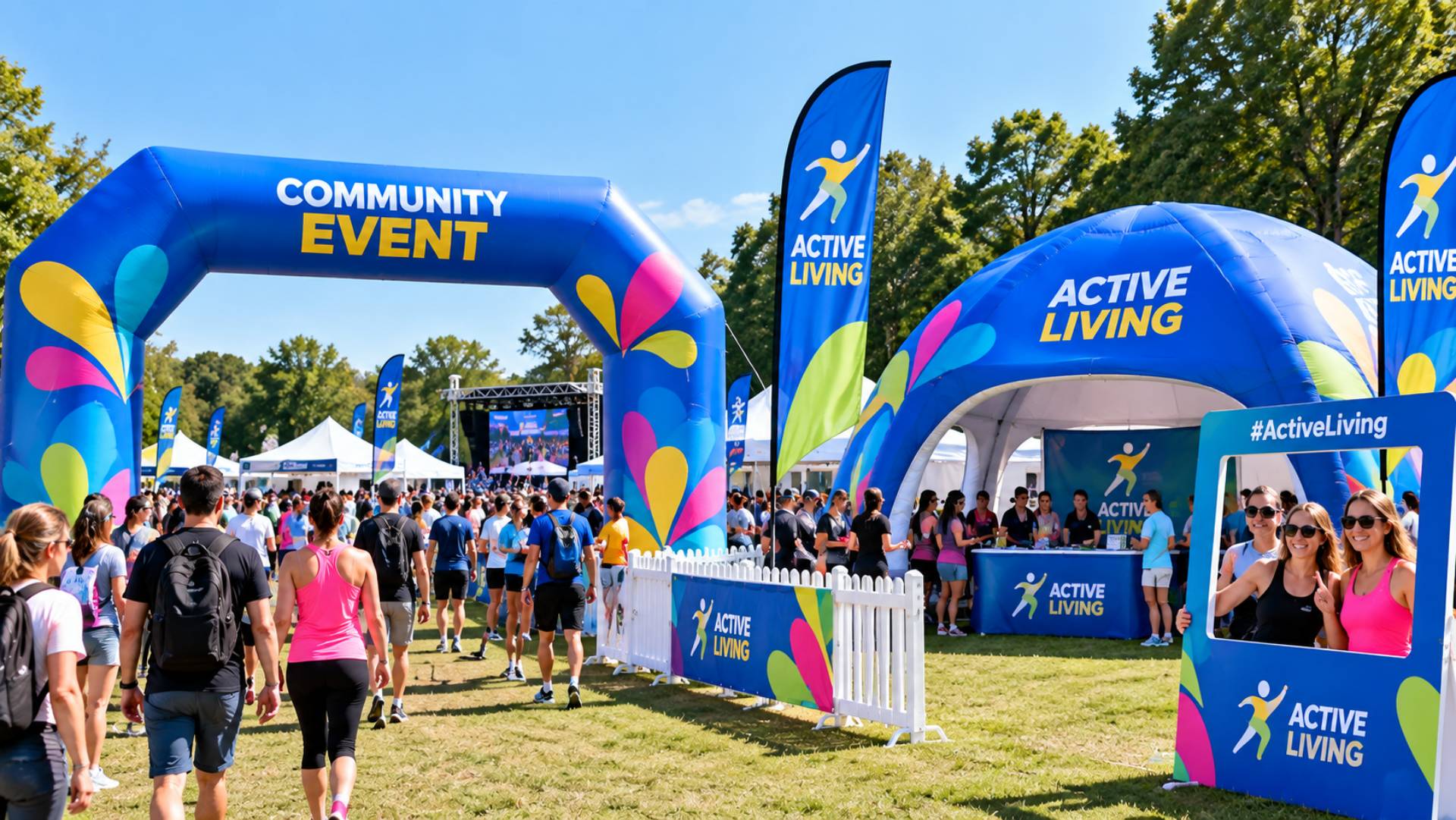
Managing how people move through an event space and creating natural points for photographs are two challenges that organisers face at almost every gathering. Clear pathways keep queues manageable and prevent bottlenecks, while inviting photo spots encourage guests to pause, engage and share their experience.
Thoughtful placement of event inflatables can address both needs at once. These large, eye-catching structures act as visual landmarks that guide movement and invite people to stop and take pictures without the need for constant staff direction.
How Inflatables Direct Crowd Movement
Large inflatable structures create immediate visual cues that help people orient themselves. An arch placed at an entrance or start line signals the beginning of a route and draws people through it. Once inside the space, spheres, characters or themed shapes can mark key zones such as information points, activity areas or exits.
Because they stand taller than most temporary signage, inflatables remain visible above heads and barriers. Guests naturally walk toward them, which reduces the chance of aimless wandering and helps distribute footfall more evenly. Positioning a prominent piece at a junction can gently steer traffic away from congested corners and toward less busy routes.
The same principle works outdoors. At festivals or outdoor promotions, an inflatable landmark becomes a fixed reference point that people use to meet friends or find their way back after exploring. This simple visual anchor reduces the need for repeated announcements or extra wayfinding staff.
Creating Natural Photo Opportunities
Guests look for memorable images, and large inflatables provide ready-made backdrops. A well-designed structure gives people something distinctive to stand beside or under, which encourages them to take photos and share them later.
Arches work especially well for group shots at entrances or finish lines. Giant characters or product-shaped forms invite individual and family poses. Mirror balls and LED versions add visual interest under different lighting conditions, extending the appeal from daytime into evening events.
The key is to leave enough open space around the structure so people can approach without blocking pathways. When the inflatable sits slightly off the main flow but remains clearly visible, it becomes a destination rather than an obstacle. Guests pause, photograph and then continue, which supports both engagement and smooth movement.
Practical Factors to Consider When Planning Placement
Successful use of inflatables depends on careful planning rather than simply choosing the largest available option. Several practical points deserve attention before the event day.
- Check the available floor or ground space and any height restrictions so the structure fits without crowding walkways.
- Consider wind exposure for outdoor sites and ensure suitable anchoring is arranged.
- Decide whether the piece needs constant power for fans or lighting and plan cable routes that do not create trip hazards.
- Leave clear access for emergency routes and wheelchair users.
- Think about how the structure will look from the most common approach angles so it remains recognisable from a distance.
These decisions help the inflatable support the overall layout instead of competing with it.
Balancing Branding with Function
Many organisers want the structure to carry logos or campaign messages. Clear branding works well when it does not overwhelm the visual form. Simple, high-contrast graphics remain readable from a distance and photograph cleanly. Overly dense text or cluttered designs can reduce the structure’s ability to act as a clean photo backdrop.
Custom shapes that relate to the event theme often prove more effective than generic forms. A structure that feels relevant to the occasion draws more genuine interest and encourages people to engage rather than simply walk past.
Common Issues and How to Avoid Them
One frequent problem is placing an inflatable too close to a high-traffic bottleneck. The attraction then creates its own queue and defeats the purpose of improving flow. Another is underestimating the space needed for people to gather and take photos, which can lead to spillover into walkways.
Weather can also affect outdoor use. Strong wind or rain may require temporary deflation or relocation. Indoor venues sometimes present power or access constraints that need early discussion with the venue team.
Early site surveys and clear communication with the supplier about intended placement usually prevent most of these difficulties. When the layout is complex or the crowd expected to be large, seeking professional advice on positioning and safety measures is a sensible step.
Integrating Inflatables into the Wider Event Plan
Inflatables work best when treated as part of the overall spatial design rather than an afterthought. Map the main desire lines people are likely to follow and position the structures so they reinforce those paths. Combine them with simpler directional signs if needed, but rely on the visual strength of the inflatable as the primary cue.
For multi-day events, consider whether the same piece will remain in one location or move between zones. Repositioning can refresh interest and help manage different stages of crowd density.
Wrapping Up
Event inflatables offer a practical way to guide movement and create inviting places for photographs. When chosen and placed with care, they reduce congestion, provide clear visual landmarks and encourage guests to pause and capture moments they want to share.
The most effective results come from matching the size and style of the structure to the space and purpose, leaving room for people to gather, and treating the inflatable as one element within a considered layout. With these points in mind, organisers can use event inflatables to support smoother crowd flow and more memorable guest experiences.