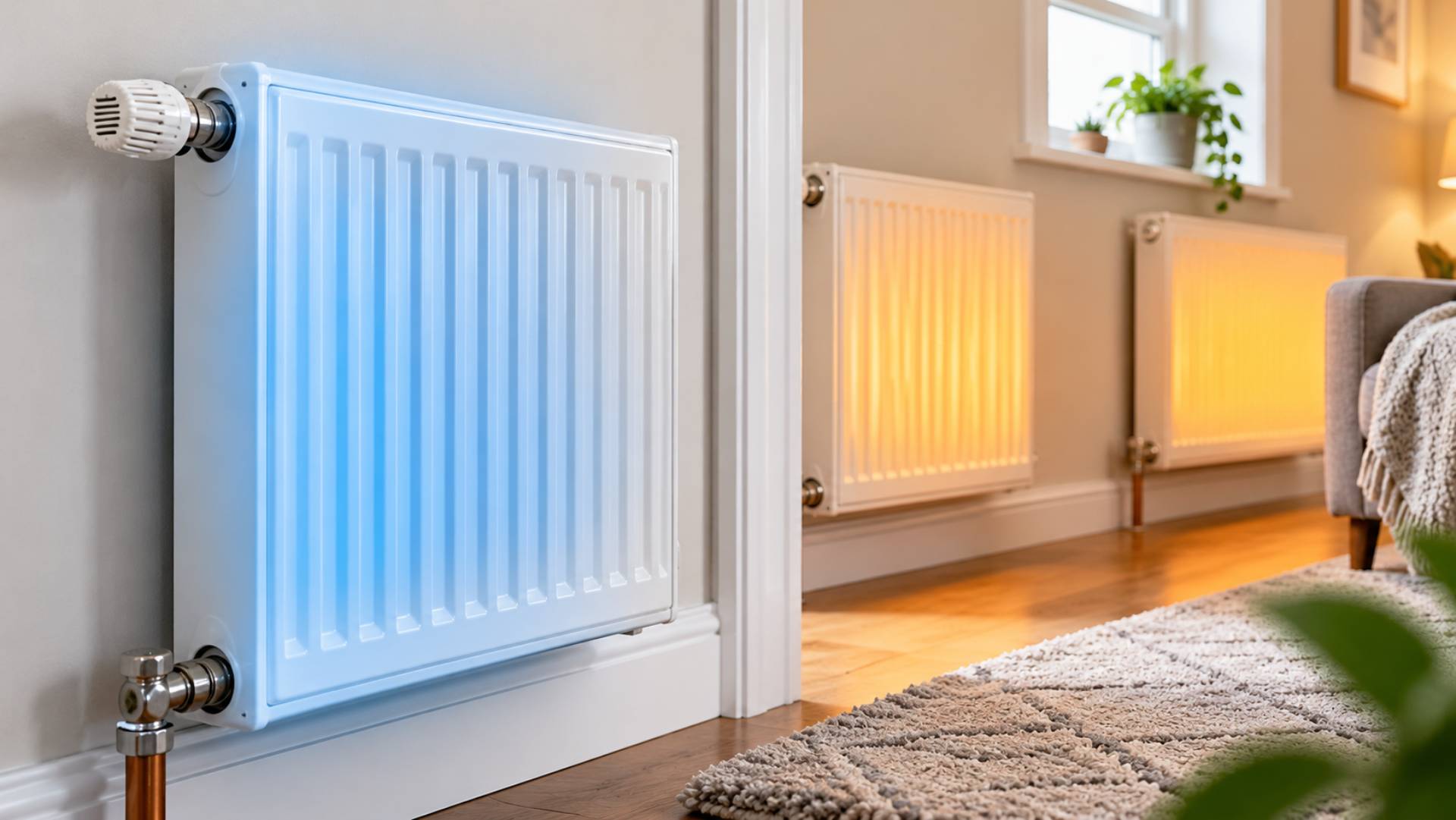
When the heating is running and most radiators feel warm, one completely or partly cold radiator can be frustrating. The good news is that the problem is often l imited to that radiator rather than the whole central heating system. Checking a few simple things can help you understand what may be wrong.
If you are dealing with radiators not heating up properly, start by looking closely at how the affected radiator feels. Whether it is cold at the top, cold at the bottom or cold all over can provide useful clues. From there, you can decide whether a basic household check may solve the issue or whether professional attention is needed.
Check Whether the Radiator Is Completely Cold
Before adjusting anything, allow the central heating to run long enough for the other radiators to become properly warm. Then carefully feel the affected radiator in different places.
A radiator that is completely cold suggests that hot water may not be entering it properly. This may happen because a valve is closed, a thermostatic radiator valve is stuck, or water flow to that part of the system is restricted.
If the radiator is warm in some areas but cold in others, the location of the cold area matters. Different temperature patterns can point towards different causes, so it is worth checking the whole surface rather than simply deciding that the radiator is not working.
Make Sure the Radiator Valves Are Open
A simple valve check should be one of the first steps. Most radiators have valves at both ends. One may be a thermostatic radiator valve, often called a TRV, which lets you control the temperature of the radiator.
Check that the adjustable valve has not accidentally been turned down to its lowest setting or switched off. Turn it to a normal heating position and give the radiator some time to respond.
The valve at the opposite end is usually used to control water flow through the heating system. It is generally adjusted when the system is balanced and should not be changed without a reason. If you are unsure of its correct position, avoid making large adjustments.
Look for Signs of a Stuck Thermostatic Valve
A thermostatic radiator valve can sometimes become stuck, particularly after the heating has been unused during warmer months. When this happens, turning the control up may make little or no difference.
A stuck internal valve pin can prevent hot water from entering the radiator. This is more likely when the whole radiator remains cold while nearby radiators are heating normally.
Removing or working on valve components requires care. If you are not comfortable checking the valve mechanism, a heating engineer can inspect it without risking damage to the valve or surrounding pipework.
Check for Trapped Air at the Top
If the bottom of the radiator feels warm but the top stays noticeably colder, trapped air may be preventing hot water from filling the radiator properly.
Air naturally rises to the highest part of the radiator. When enough air collects there, water cannot circulate through the entire panel and the upper section remains cool.
Bleeding the radiator releases this trapped air. The heating should normally be switched off and the radiator allowed to cool before bleeding. A radiator key is then used to open the bleed valve carefully until trapped air escapes.
Once water begins to appear, the valve should be closed securely without overtightening it. After bleeding, sealed heating systems may also need their boiler pressure checked because releasing air can sometimes reduce system pressure.
Notice Whether the Bottom Stays Cold
A radiator that is hot near the top but noticeably cold across the bottom may have restricted circulation inside it. Over time, deposits can collect within central heating systems and settle in lower parts of radiators.
Bleeding will not normally correct this pattern because the issue is not trapped air. The deposits may need to be removed by flushing the radiator or, where contamination affects more of the system, by carrying out a wider system clean.
Removing a radiator for flushing involves water, valves and heating connections, so it is not always suitable as a do-it-yourself task. Professional advice is sensible if you are unsure about isolating the radiator or protecting the rest of the system.
Consider Whether the Heating System Needs Balancing
Sometimes a radiator warms slightly but never becomes as hot as the others. This can happen when the central heating system is not distributing hot water evenly between radiators.
Balancing controls how much water passes through each radiator. Without correct balancing, radiators closer to the boiler or pump may receive more flow while others receive less.
Balancing usually involves making small adjustments to radiator valves throughout the property rather than changing only the cold radiator. Because one adjustment can affect another radiator, the process needs to be carried out carefully.
If several radiators heat at noticeably different rates, professional balancing may be worth considering.
Check the Boiler and System Pressure
Even when only one radiator appears troublesome, it is still worth checking that the boiler is operating normally. Confirm that the heating is switched on and that the other radiators continue to warm as expected.
If you have a sealed central heating system, look at the boiler pressure gauge and compare the reading with the operating range stated in the boiler manufacturer’s instructions. Avoid assuming that one pressure figure applies to every boiler.
Repeated pressure loss should not simply be corrected by continually topping up the system. It can indicate a leak or another problem that needs investigation.
Watch for Leaks Around the Radiator
Check around the radiator valves, pipe connections and surrounding floor for signs of moisture. Even a small leak deserves attention because loss of water can affect heating system performance.
Do not keep tightening fittings in an attempt to stop an unexplained leak. Overtightening can damage seals, valves or connections.
If water is appearing around a valve, pipe joint or radiator body, turn to a qualified heating professional. A leak may require a new seal, valve, fitting or another repair depending on its location and condition.
Know When to Call a Heating Engineer
Basic checks such as confirming valve settings and identifying where the radiator feels cold are reasonable for most householders. More involved work should be approached carefully.
Professional help is appropriate when the radiator remains completely cold after simple checks, a valve appears faulty, leaks are present, system pressure keeps dropping or the radiator needs flushing.
You should also seek advice when several heating problems appear at the same time. That may suggest a wider circulation, boiler or system issue rather than a fault affecting one radiator alone.
Wrap-Up
When one radiator stays cold while the rest are warm, start with the simplest possibilities. Check its valves, identify where the cold areas are and consider whether trapped air, deposits or uneven water flow could be affecting performance. These observations can narrow down the cause without unnecessary changes to the heating system.
Bleeding may help a radiator that is cold at the top, while a cold bottom can point towards restricted internal flow. A radiator that remains completely cold may have a valve or circulation problem. If basic checks do not resolve the issue, or you notice leaks, repeated pressure loss or uncertain valve behaviour, asking a qualified heating engineer to inspect the system is the safer approach.